author of the L3 trilogy · creator of the Cosmic Theory of Consciousness and Universe Inheritance
“We sense that this is possible within science, but we do not yet know exactly how.”
THE L3 TRILOGY
a story that begins with being watched — and ends with passing it on
Three volumes. One story told in three gestures: first we discover that someone is watching us.
Then we decide to answer — not with words, but with twenty years of work and a ship that
should not exist. In the end we understand that we are a link in a chain — and we pass it on.
This is hard SF with one iron rule: the physics has to hold, and greatness is measured in decisions,
not explosions. And beneath the story — a complete, original theory of the universe, free to download below.
Because questions are not for sale.
The novels are currently published in Polish. The theory and the propulsion study below
are fully available in English.
VOLUME I
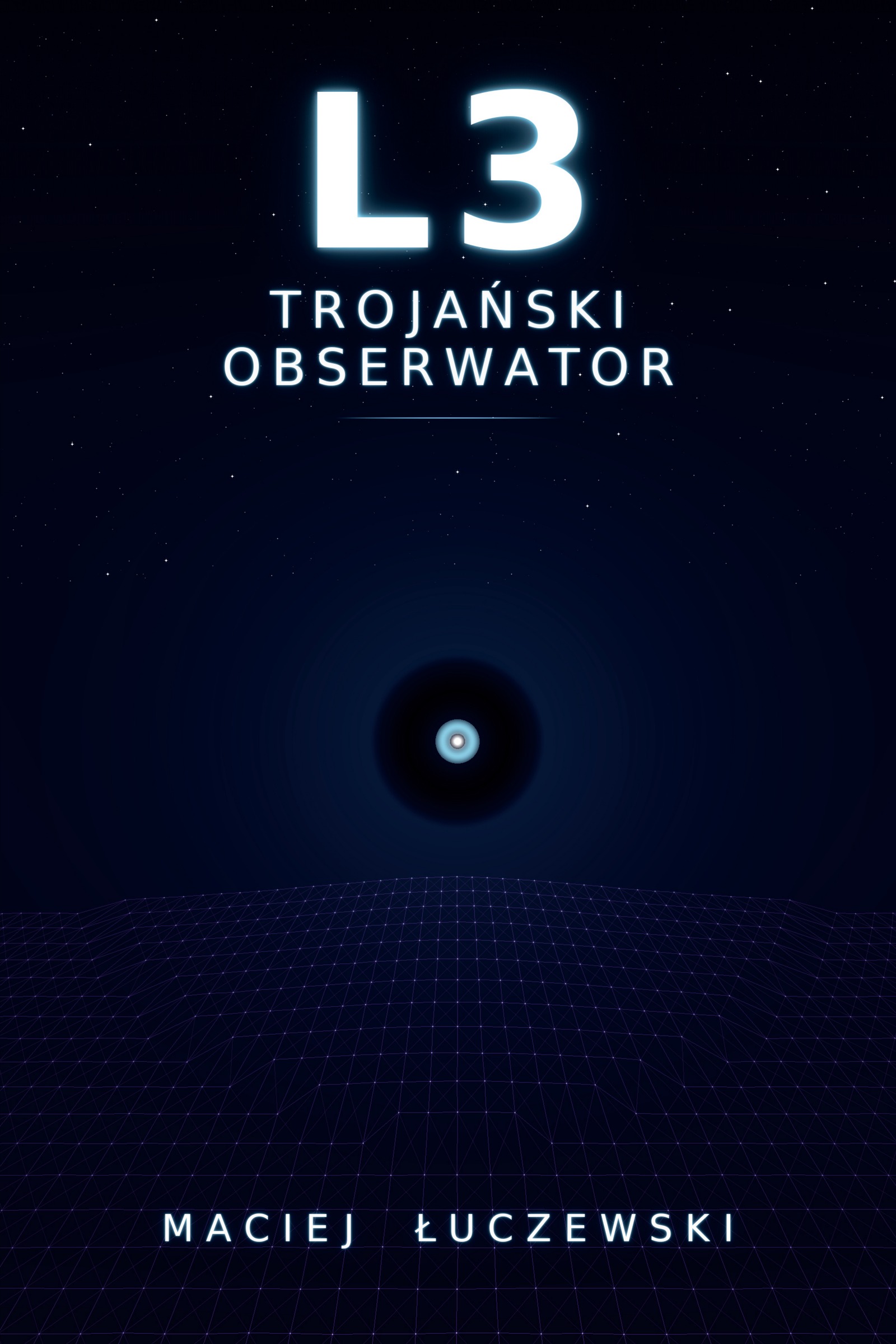
L3: THE TROJAN OBSERVER
How long were we not alone before we noticed?
3I/ATLAS is real. The third interstellar visitor in the history of observation passed through
the Solar System in the autumn of 2025 — and that is exactly where this book begins: in a world
just like ours. Then, one November night, the comet vanishes from the screens of twenty-three
observatories at once — and the story veers into the reality that could have happened if the object
had turned out to be what the boldest suspected. Because from the very beginning its path looked
too little like an orbit — and too much like a flight plan.
This is not an invasion story. Nobody shoots at saucers here. It is worse: a growing, cold certainty
that something has been watching us for a very long time. And then December comes — and a night after
which “are we alone?” stops being humanity's greatest question, because someone else is asking it.
A discovery thriller written to the rhythm of data, night phone calls and decisions that cannot be
undone. After the last page you will look at the night sky differently. Not with fear. With vigilance.
“On one side of the line was the world he had served for twenty-eight years.
On the other side — everything else.”
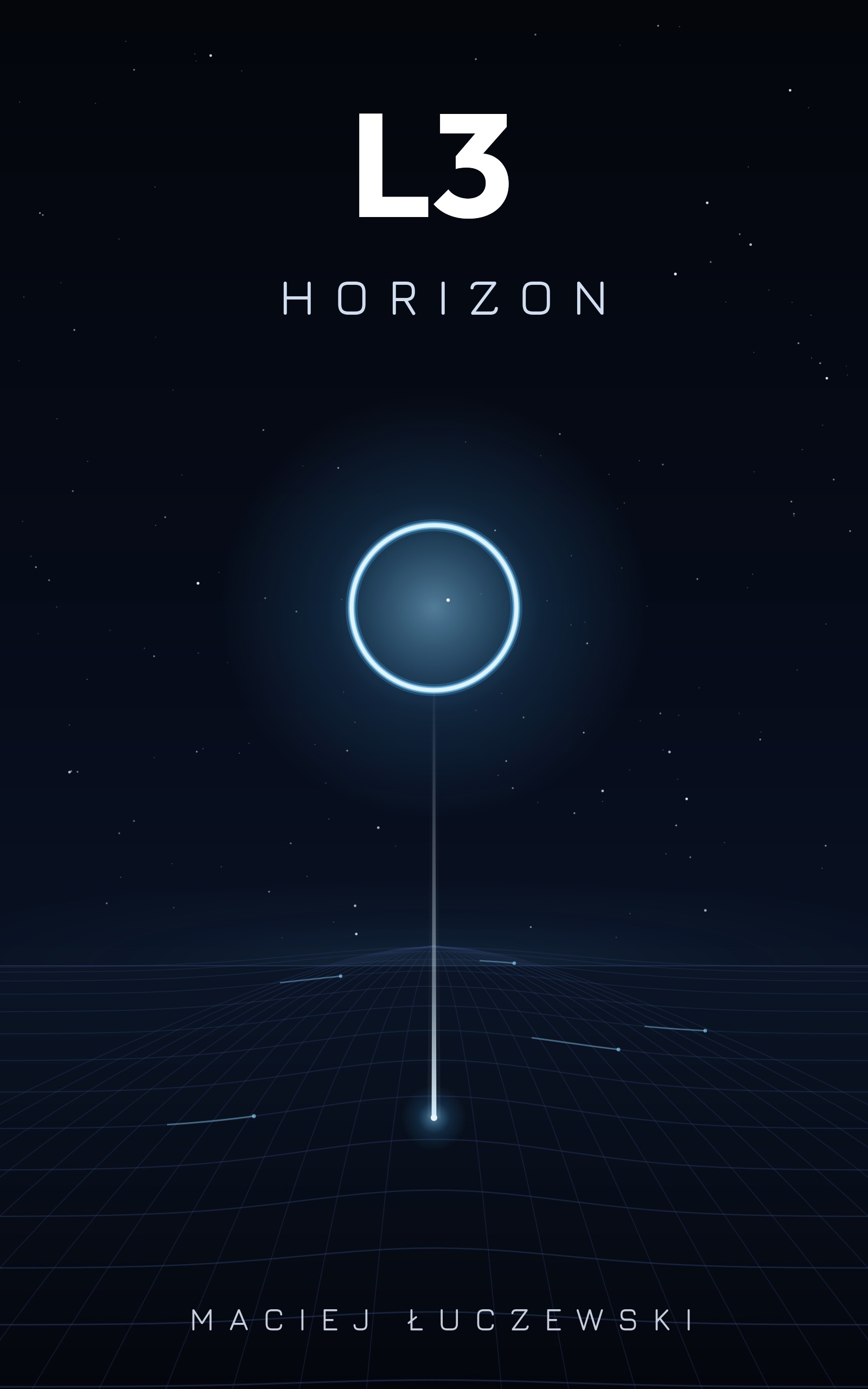
What can you build from nothing, if you remember what for?
Do you know the hardest thing about the end of the world? That the next day is another day.
Cinema can film a catastrophe. It cannot film the twenty years that come afterwards — and this book
is about exactly those years. About people who, in a world without a grid and without illusions, decide
not to rebuild the old world, but to build an answer. Because up there, someone is
waiting for one.
Five Ignitions, five acts of stubbornness: a power plant on the Baltic coast that wakes first.
“Made, not found.” Cold fire. And a ship built by a generation that knows it will not fly on it.
If you love “The Martian” for its faith in engineering and Liu Cixin for the breath of centuries —
this is your shelf. Hope is not a feeling. Hope is a craft.
“The power comes from a real grid — from a heat-and-power plant brought back to life,
block by block.”
Do you know how trilogies about first contact end? With a great battle or a great revelation.
This one ends with a conversation — and it is the most breathtaking ending you will get in years.
A ship built by the hands of survivors carries a handful of people toward something that has been
waiting longer than our species has existed. There are children born between the stars, for whom Earth
is a bedtime story. There are threads — dreams spun at night between the children of the ship and their
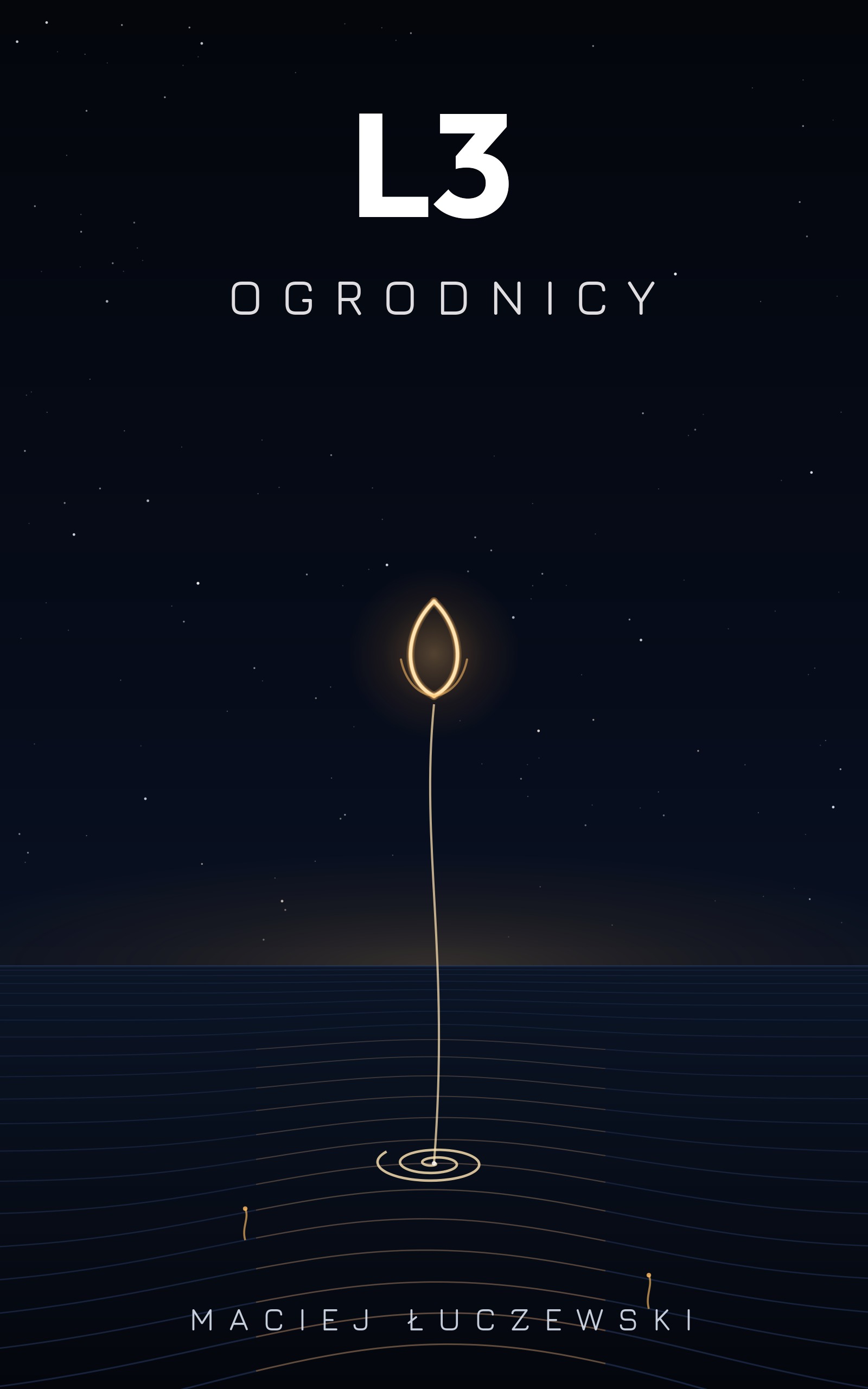
peers back home. And there are the Gardeners. We will not tell you who they are.
At the end waits something unprecedented: a complete scientific treatise, bound like a relic.
You can skip it. You will not.
You are not alone. This time it is us saying it.
“We carried the water. We drank. Now we carry it on — the well has no bottom,
it has another shore.”
Cosmic Theory of Consciousness and Universe Inheritance · free to download, in full
What if black holes are not graves, but wombs? What if our universe is one leaf on a growing tree
of cosmoses — and the accelerating expansion that astronomers patch with “dark energy” is simply
the pressure of newborn children upon the parent?
CTCUI is an original cosmological hypothesis that brings several of the greatest puzzles of modern
physics into a single frame: the Hubble tension, the nature of dark energy, the black hole information
paradox, the fine-tuning of fundamental constants — and the hard problem of consciousness. Its core:
universes form an evolving population; consciousness is quantum information that does not perish with
the death of the body, but is inherited. The theory makes seven groups of testable predictions —
and honestly states what would refute it.
This is not a revelation and not a dogma. It is a hypothesis put forward with honesty and
seriousness. If you have read “The Gardeners” — this is that treatise. If you have not — open it
on any page.
The theory is not for sale. It is for sowing. If, after reading, you want to see it
live inside a story — the L3 trilogy is waiting above.
How would a ship built by survivors get there?
QFHPS — a hybrid interstellar propulsion concept · technical study, free to download
The ship from “HORIZON” does not have an engine out of a hat. It has a concept assembled from
elements physics knows — combined into a whole it cannot yet build: plasma ignition, a scoop that
collects fuel along the way instead of carrying it, the catalytic hot CNO cycle (which is why they
had to mine Callisto before departure), a magnetic sail brake that sheds speed against the
interstellar medium — without a gram of propellant — and Casimir cavities as the only negative
energy ever measured in a laboratory.
The study is honest with the physics: you will find the calculations that hurt (how long
acceleration really takes at a fraction of g; what a milligram of dust does at eight percent of
the speed of light), and an explicit status for every claim — fact, extrapolation, or clearly
marked speculation.
For the hard-SF reader: dessert. For the engineer and the student: an invitation to calculate
better. For whoever one day builds such a drive: a seed.
All documents are licensed under CC BY-NC-ND 4.0: you may copy and share them
in any medium with attribution to the author and source; you may not use them commercially or distribute
modified versions. No registration, no e-mail gate — a seed should fly with the wind.
ABOUT THE AUTHOR
Maciej Łuczewski is a Polish writer and independent researcher fascinated by the intersection of
science, history and philosophy. He is the author of the hard science fiction trilogy “L3”
(“The Trojan Observer”, “HORIZON”, “THE GARDENERS”) and the creator of the Cosmic Theory of Consciousness
and Universe Inheritance (CTCUI), which explores the idea that black holes may be gateways to new
universes and consciousness a fundamental part of the cosmos.
His books combine scientific precision with poetic imagination. He writes in Polish and lives
in Gdynia — the city that, in his novels, builds a starship.
Press kit for the L3 trilogy: publishing data, high-resolution covers and ready-made blurbs.
Free to use in reviews, articles and catalogues. Review copies (EPUB; print from Dec 1st) — one e-mail, no formalities.
The novels are currently published in Polish; English translations are on the roadmap, and translation/world rights are available.
Genre: hard science fiction (Lem · Watts · Liu Cixin). Publisher: Maciej Łuczewski (own imprint, registered with the National Library of Poland).
The scientific backbone of the trilogy — the CTCUI theory and the QFHPS propulsion concept — is open access with DOIs (see the downloads section above).
Author bio & photo, interviews, rights enquiries: maciej.luczewski@outlook.com.